


If you are a first time hot tub buyer, the hard part is not finding models. It is sorting real advice from sales talk.
After reviewing buyer threads on the internet, one pattern stands out. People do not only ask about brand names. They ask about wet tests, power bills, dealer support, deck safety, delivery access, and whether the cheap tub stays cheap after the first year.
The buyer guides we found in search results cover benefits, features, and broad shopping tips. The gap is a page built around the friction real buyers hit before they spend money. This guide fills that gap.
Start with the job your hot tub needs to do
Here is why this comes first. A hot tub that works for a quiet nightly soak may be the wrong tub for a family hangout space.

Dealer guides often begin with purpose, and buyers do the same. Some want pain relief and stronger jets. Some want a calm soak. Some want room for kids or guests. Some want the lightest water-care routine they can get.
Your reason for buying should decide size, seating, and feature list before you compare logos.
Write down your top two use cases. Not five. Two. That forces tradeoffs early.
A simple example:
- Daily unwind after work
- Family use on weekends
That shortlist changes what matters. You will care more about seat comfort, easy entry, good insulation, and water care you can live with. You may care less about flashy extras or a very high jet count.
Buyers also say that many people start with “I want the Toyota of hot tubs,” not “I want the most features on paper.”
That tells you what first-timers really want: comfort, low hassle, and support after the sale.
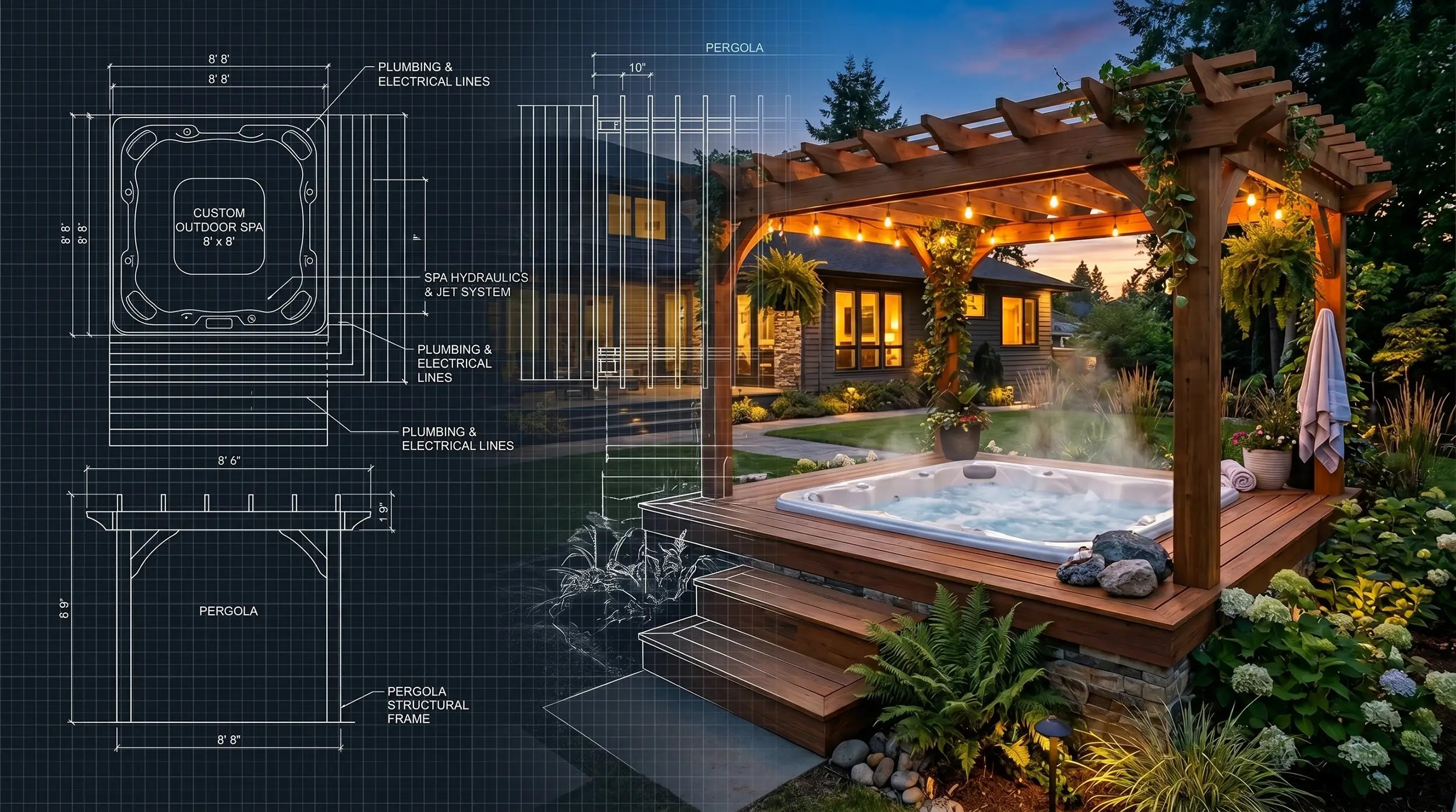
Pick the site before you fall in love with a model
A hot tub is a home project as much as it is a product.
Hot tub buyers keep learning this late. They find a model they like, then discover a tight delivery path, a deck that should not carry the load, or power that needs work.

Dealer pages also stress the base, delivery path, and electrical setup for the same reason.
Start with four checks:
- Foundation. A solid, level base matters. Concrete pads come up again and again in dealer advice, and deck threads are full of warnings not to assume an existing deck can handle the weight once you add water and people.
- Delivery path. Measure gates, stairs, overhead clearance, and tight corners. Many first-time buyers only think about where the tub will sit. The delivery crew cares about every inch between the curb and that spot.
- Electrical. Talk to an electrician before you sign. Buyers in recent threads keep flagging power work and copper wire as a real cost, not a footnote.
- Access after delivery. Leave room for the cover to open and for service work later. That sounds small on day one. It matters a lot when a part fails in winter.
Size and seating beat brochure math
Let’s break it down. The seat count in a brochure is not the same as comfortable real use.
In a recent thread on the internet, a family of four was already thinking a six-person tub might fit better. Other owners called out lounge seats as a love-it-or-hate-it choice.
That is a big clue for first-time buyers. Do not buy by seat count alone. Buy by how people will sit, move, and share leg room.
This is also why wet testing matters so much. Threads on wet tests keep circling back to the same point: two tubs that look similar on paper can feel very different in the water. Buyers change their minds after a test soak.
Some dealers ask for 48 to 72 hours notice, which is normal if they need to prep the tub. If a wet test is not possible, at least dry-sit the seats. One recent buyer said some seats hit the hips the wrong way even before water entered the picture.
What to check in person:
- Can shorter users stay planted without floating?
- Does the lounger fit your height?
- Is entry easy?
- Do your feet fight for space?
- Are the jets useful, or just loud?
A wet test is not a gimmick. It is the hot tub version of a test drive.
Buy the dealer, not just the shell
This may be the single most useful lesson.
Over and over, hot tub owners say the dealer relationship shapes the ownership experience more than the logo on the cabinet. A recent shopping thread put it bluntly: find a dealer you trust first, then pick a model from that dealer.
Another buyer thread warned that a hot tub is a machine and will need work at some point. That makes service, parts, and honest guidance part of the product.

This theme gets even stronger when buyers compare Costco or roadshow tubs with local dealers. The appeal of a big-box tub is clear. Lower sticker price. Easy checkout. Good return reputation.
The catch is support can vary a lot by market and brand. Some buyers had smooth experiences. Others ran into leaks, slow warranty help, or trouble finding local service.
That does not mean dealer is always right and Costco is always wrong. It means support is part of the price, and you need to price it in before you buy.
Budget for the full first year, not only the tub
Sticker shock gets attention. First-year shock does more damage.
Buyers ask about running cost, service plans, filters, chemicals, power bills, and wiring because those are the costs that show up after the sale.
Angi’s March 2026 data also points to the same issue. It lists routine service calls at $75 to $150 per hour and average annual maintenance around $600, with total spend moving up or down based on size, type, location, and use.

For a real budget, plan for:
- Tub price
- Foundation or pad
- Electric work
- Delivery or crane if needed
- Cover lift, steps, and starter supplies
- Monthly power and water care
- Filter replacement
- Service visits, or your own time if you do water care yourself
Power cost is where buyers often want one universal number. There is no honest one-size answer.
Threads show that utility impact changes with climate, insulation, tub type, and how often you use it. Inflatable tubs draw more complaints about power use than many hard-shell models.
So ask the dealer for a realistic local range, then sanity-check it against owner reports in your climate.
Features that matter more than first-time buyers think
Brand pages often lead with jets, wellness, lighting, apps, and tech add-ons. Those things sell in a showroom.
Owner threads bring the conversation back to comfort, insulation, filtration, parts, and service. That gap is where a lot of buyer regret starts.

For most first-time buyers, these features matter most:
- Seat comfort. You feel this every soak.
- Insulation and cover quality. These affect running cost and winter use.
- Water care system. Ask what daily or weekly routine owners really follow.
- Local parts and service. A part you cannot get fast is a real problem.
- Simple controls. Many owners would trade extra gadgets for fewer things to fail.
- Seat layout. A lounge seat is not an upgrade for every family.
Treat speakers, app control, and showroom flash as nice extras, not core decision makers, unless you know you will use them.
New, used, or big-box?
A first-time buyer usually has three paths.
New from a local dealer is the safest path for most shoppers. You get a warranty, clearer support, and a place to go when you need help with water care or repairs. Our advice leans this way for people who want fewer surprises.
Used can work, though only when the discount is real and you can verify age, condition, parts access, and who will service it. One hot tub buyer put it well: if you are only saving a little, new with a warranty is often the smarter move. Another older first-time buyer thread warned that shells can last a long time, but pumps and other parts are where risk lives.
Big-box or event tubs can lower the upfront number. That is the draw. The tradeoff is support can be uneven. Buyer threads about Costco and expo sales keep returning to the same fear: who fixes the tub when something goes wrong?
Ask these questions before you say yes
This section is built for featured snippet potential and real buying value.
- Who does warranty service in my ZIP code?
- Can I wet test this model or one from the same line?
- What is the filled weight, and what base do you require?
- What electrical setup does this model need?
- What is included in delivery, setup, cover lift, steps, and starter chemicals?
- What does a realistic first-year running cost look like in my climate?
- How long is lead time, and how are parts delays handled?
- Are filters and common parts easy to get locally?
- What seat layout do buyers like most in this model?
- What water care routine do most owners actually use?
If a salesperson gets vague on service, wet tests, weight, or power, slow down.
First-time buyer checklist
Use this before you buy:
- Measure the space and the delivery path.
- Confirm the base or pad plan.
- Talk to an electrician.
- Set an all-in budget, not just a tub budget.
- Shortlist three models.
- Dry-sit them. Wet test if you can.
- Compare dealer support and warranty terms.
- Get a written quote with extras listed.
- Sleep on the decision for a day.
Common mistakes first-time buyers make
The same mistakes show up again and again in threads:
- Buying by jet count. More jets on paper does not mean a better soak.
- Skipping the wet test. That is where comfort issues show up.
- Underbudgeting power work. Many buyers do not price this early enough.
- Trusting a deck without proof. Hot tubs are heavy.
- Chasing the lowest sticker price. Support and parts matter after delivery.
- Assuming “low chemical” means “no maintenance.” Water care still matters.
FAQ from buyer questions

What do owners wish they knew before buying a hot tub?
Most wish they had focused earlier on seat comfort, dealer support, wet testing, and running cost instead of brochure features. That pattern shows up in multiple first-time buyer threads.
Is a wet test really needed?
Yes, if the dealer offers it. Buyers often change their minds after they get in the water. If a wet test is not available, dry-sit the tub and compare seat fit very closely. Some dealers ask for advance notice to prep the tub, which is normal.
How much extra is the power bill each month?
It depends on climate, insulation, tub type, and use. Threads show wide variation, and inflatables get more complaints about power draw. Treat any flat number with caution.
Should I buy from Costco or a dealer?
For most first-time buyers, a strong local dealer is the safer path because service and warranty support matter so much after delivery. Costco-style buying can still work in some markets. The key question is who services the tub where you live.
What if I want the lightest chemical routine possible?
Ask about water care systems, then ask owners what they still do week to week. Buyers looking for the lightest chemical routine still end up talking about sanitation, water testing, drains, and how their skin reacts. There is no true no-care path.
Sauna vs hot tub: which is right for you?
In the sauna vs hot tub question, the choice comes down to dry heat versus warm water. A sauna uses hot air for a dry sweat, while a hot tub surrounds you in heated, jetted water. A hot tub is often the easier fit for soaking, socializing, and joint comfort, while a sauna suits people who want a high-heat sweat session. Some homeowners end up with both for different moods. If a sauna is what you are weighing, start with our home sauna buying guide.


