


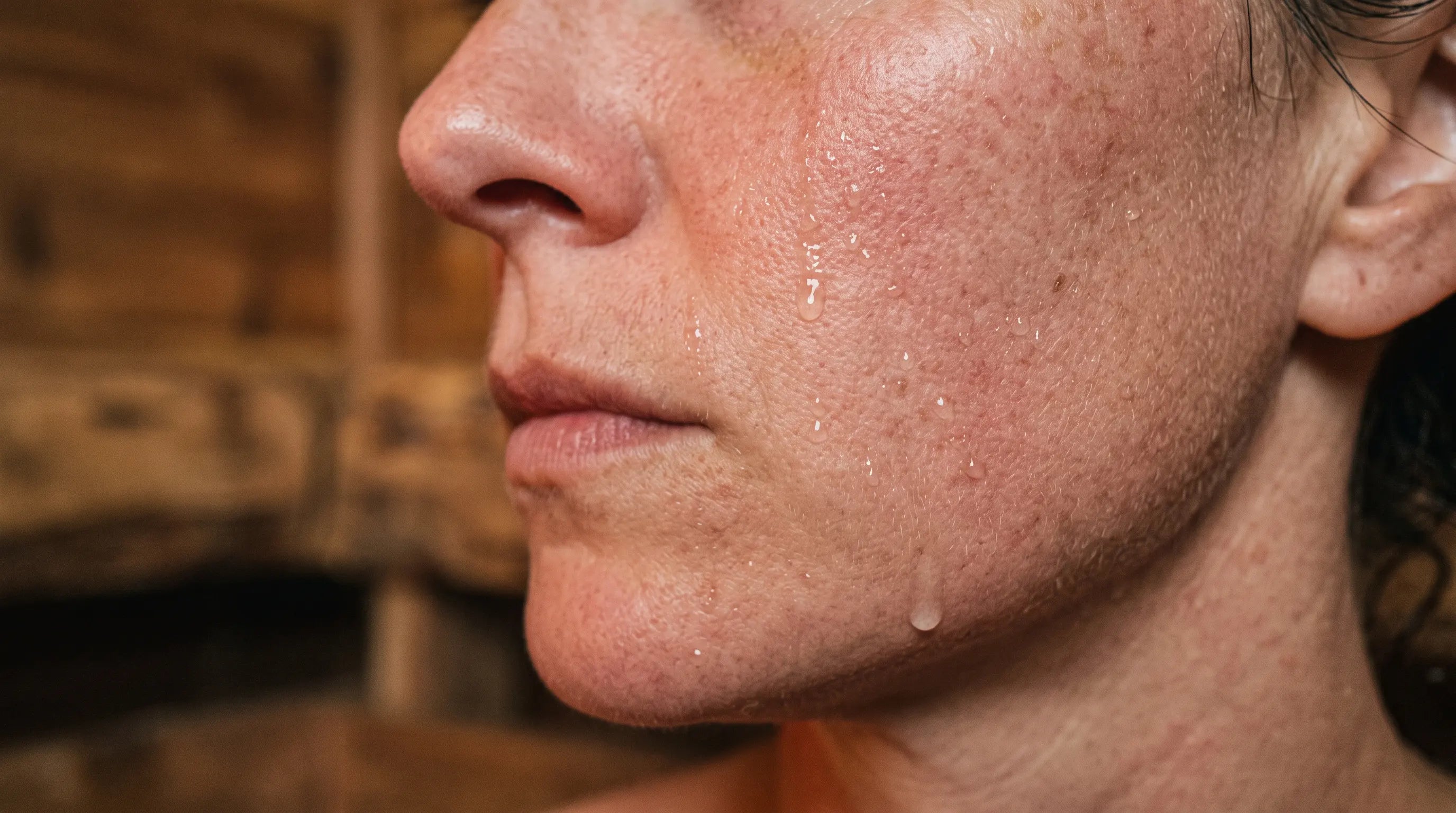
Yes, sauna can be good for skin for many people. Heat raises blood flow to the skin, sweating can make skin feel fresher after cleansing, and regular sauna use may help the outer skin layer hold water better. A controlled study in healthy adults found that regular Finnish sauna users had better skin hydration, steadier skin pH, faster recovery after water loss, and lower forehead sebum levels than non-users.
The real answer is more personal. Sauna can also make skin feel tight, dry, red, itchy, or bumpy if you stay too long, skip a gentle rinse, use harsh cleansers, or pair heat with strong actives like retinoids. People with rosacea or heat-triggered redness need extra care, since Mayo Clinic lists hot baths and saunas among common rosacea flushing triggers.
Here is why the answer is not just yes or no.
What People Mean When They Ask if Sauna Is Good for Skin
Internet threads show that people ask this question for four main reasons.
They want to know if sauna gives better skin. One sauna user asked whether sauna can improve skin quality and whiteheads because they could not find a clear answer.
They want to know if sauna helps acne. One user reported that sauna seemed to calm cystic acne, while another thread asked whether regular use reduced acne or facial oiliness.
They want to know if sauna dries skin out. Another user said sauna left their dry, sensitive skin red, tight, and more acne-prone, while they were also using Differin.
They want to know if steam or sauna helps wrinkles. An anti-aging thread asked whether steam rooms really help wrinkles, or if the post-heat look is just dehydration making fine lines more visible.
So the best answer is this: sauna may support a healthier-looking glow and better-feeling skin when used with the right routine, but it is not a cure for acne, wrinkles, rosacea, or skin disease.
How Sauna May Help Your Skin

1. Sauna increases blood flow to the skin
A sauna session puts your body under controlled heat stress. Harvard Health notes that dry sauna heat can raise skin temperature quickly, increase heart rate, and direct much of the extra blood flow toward the skin.
That extra blood flow can explain the sauna glow people notice after a session. Skin may look warmer, smoother, or more even for a short time. That glow is not magic. It is mainly heat, circulation, sweat, and a relaxed nervous system.
2. Sauna may support the skin barrier over time
The skin barrier is the outer layer that helps keep water in and irritants out. In the controlled sauna study, regular sauna users showed stronger recovery after water loss and better water-holding capacity in the stratum corneum, the outermost skin layer.
That does not mean one sauna session will fix dry skin. It means regular, sensible use may train skin to handle heat and water loss better in healthy adults.
3. Sauna can make cleansing feel easier
Sweat, warmth, and humidity can soften dead skin on the surface. That may be why some people feel cleaner or smoother after a sauna and shower.
This does not mean your pores open and close like doors. It means heat and sweat can loosen oil, salt, sunscreen, and dead skin so a gentle wash works better. The key word is gentle. Scrubbing hard after sauna can irritate skin and make acne or redness worse.
4. Sauna can help stress, which can affect skin
Many people use sauna to relax. Stress does not cause every skin issue, but it can make some conditions feel worse. A calm, repeatable routine may help people stay consistent with sleep, hydration, recovery, and skin care.
That indirect benefit matters. A sauna will not replace a dermatologist, but it can become part of a steady wellness routine. For a wider look at the evidence, see our guide to the research-backed benefits of sauna.
Can Sauna Help Acne?

Sauna might help some acne-prone people, but it can worsen breakouts for others.
The upside is simple. Heat makes you sweat. A post-sauna rinse can remove sweat, oil, and dead skin from the surface. Some users report fewer breakouts when they sauna and cleanse right after. The internet has anecdotal reports of clearer skin after sauna use, including one user who said sauna seemed to stop severe cystic acne.
The downside is just as real. Sweat sitting on the skin can mix with oil, dirt, makeup, sunscreen, and bacteria. The American Academy of Dermatology says heavy sweating plus buildup of oil, dirt, and bacteria can contribute to acne, and it recommends clean clothing, gentle sweat removal, and showering after sweaty activity.
So the acne answer is this: sauna may help acne-prone skin if you cleanse before, rinse after, avoid makeup in the sauna, and do not let sweat sit on your face or body. It may worsen acne if heat, friction, sweat, dirty towels, tight clothing, or heavy products stay on your skin.
Sauna acne routine
- Start with clean skin. Remove makeup and heavy sunscreen before you enter.
- Bring a clean towel. Pat sweat, do not rub.
- Keep sessions moderate. Try 10 to 15 minutes first, and see how long you should sit in a sauna for more.
- Rinse after. Use lukewarm water and a mild, non-comedogenic cleanser if you are acne-prone.
- Moisturize. Even oily skin needs barrier support after heat.
- Watch your pattern. If breakouts always flare 24 to 72 hours after sauna, lower session time or pause and speak with a dermatologist.
Does Sauna Dry Out Your Skin?

Sauna can dry out your skin if your routine is too harsh. Dryness is more likely if you stay in too long, use very hot showers after, cleanse twice with strong soap, skip moisturizer, or use retinoids and exfoliating acids on the same night.
This is where many people go wrong. They blame sauna when the real trigger may be the full routine: gym, pool chlorine, shower, sauna, second shower, cleanser, retinoid, and not enough barrier repair.
A better post-sauna skin routine is simple.
- Cool down before applying products. Give your skin a few minutes to stop flushing. Applying active products while your face is still hot and red can sting.
- Rinse sweat off. Use lukewarm or cool water. Avoid long hot showers right after sauna.
- Cleanse only as needed. If you wore sunscreen, makeup, or heavy face products, use a mild cleanser. If your skin is very dry, a water rinse may be enough after a pre-sauna cleanse.
- Moisturize while skin is slightly damp. Use a fragrance-free moisturizer. Look for ingredients like glycerin, ceramides, squalane, petrolatum, or hyaluronic acid.
- Be careful with retinoids. If sauna makes your skin sting or peel, do not use retinoids, exfoliating acids, or benzoyl peroxide right after sauna. Try those on non-sauna nights.
Is Infrared Sauna Good for Skin?

Infrared sauna may be a better fit for people who want heat exposure at lower air temperatures. Mayo Clinic explains that infrared saunas heat the body directly, while regular saunas heat the air around the body. Mayo also notes that infrared saunas create effects like sweating and increased heart rate at lower temperatures than regular saunas.
For skin, that can matter. If you like sauna but dislike extreme heat, infrared may feel easier to tolerate. That may help people stay consistent without overdoing it. You can browse infrared saunas for home if a gentler heat sounds right for your skin.
Still, infrared is not automatically better for acne, wrinkles, or collagen. The skin routine matters more than the label on the sauna.
Is Traditional Sauna Good for Skin?
Traditional sauna gives a hotter, classic heat experience. The North American Sauna Society describes a traditional sauna as a room heated to about 150°F to 195°F, with humidity controlled by adding water to heated rocks.
Traditional sauna can create a strong sweat and a deep heat feel. Many people love it for the ritual. For skin, that can mean a stronger glow, but also a higher chance of redness if you run hot or sit too close to the heater.
Choose traditional home saunas if you want a classic Finnish-style experience, higher heat, and the option to adjust humidity. Choose infrared if you want a gentler air temperature, steady sweat, and a more indoor-friendly setup. For a deeper comparison, see our guide on infrared vs traditional saunas.
Want help comparing infrared vs traditional for your skin? Book a video consult with a sauna expert to match heat type to your skin and space.
Sauna by Skin Type: Heat, Time, and Routine
Use this matrix as a starting point, then adjust to how your skin feels the next day. When in doubt, go shorter and gentler.
| Skin type | Best heat | Session length | Post-sauna routine |
|---|---|---|---|
| Acne-prone | Infrared or moderate traditional | 10 to 15 min | Cleanse before, pat sweat with a clean towel, rinse, then a mild oil-free cleanser and light moisturizer. No makeup inside. |
| Dry | Infrared or lower heat | 10 to 12 min | Pre-cleanse, water rinse after, fragrance-free moisturizer on damp skin. Skip hot showers and acids that day. |
| Sensitive or over-exfoliated | Infrared, cooler setting | 8 to 10 min, sit lower | No acids, scrubs, or retinoids on sauna days. Cool down, lukewarm rinse, barrier moisturizer. |
| Rosacea-prone | Lowest heat you tolerate, sit low and away from the heater | 5 to 10 min, stop if it burns | Cool down slowly, lukewarm rinse, gentle fragrance-free moisturizer. Test short sessions and ask a dermatologist. |
| Normal | Infrared or traditional | 10 to 20 min | Rinse, cleanse if you wore SPF or makeup, moisturize on damp skin. Move retinoids to non-sauna nights. |
When Sauna May Be Bad for Skin
Sauna is not right for every skin type or every day.

Rosacea or flushing
Heat can trigger flushing. Mayo Clinic lists temperature extremes, hot baths, and saunas among triggers that can worsen rosacea flushing.
If you have rosacea, test short sessions, sit lower in the sauna, avoid peak heat, cool down slowly, and stop if redness burns or lingers.
Heat rash
Mayo Clinic says heat rash happens when sweat gets trapped in the skin, with symptoms ranging from small blisters to inflamed lumps. It is more common in hot, humid settings.
If you get itchy bumps after sauna, it may not be acne. It could be heat rash, folliculitis, or irritation.
Folliculitis
Mayo Clinic describes folliculitis as inflamed hair follicles that can look like small pimples, often linked with infection or irritation.
If bumps are itchy, painful, pus-filled, or repeat after heat, get a diagnosis before treating them like acne.
Sensitive or over-exfoliated skin
If your skin barrier already feels tight, burning, or raw, sauna may feel too intense. Cut your session time and skip acids, scrubs, and retinoids on sauna days.
The Best Sauna Routine for Better Skin
Here is a simple routine for most people.
Before sauna
- Remove makeup.
- Cleanse sunscreen or heavy products if needed.
- Drink water.
- Bring a clean towel.
- Avoid applying oils or heavy creams before entering.
During sauna
- Start with 10 minutes.
- Sit where heat feels strong but not harsh.
- Pat sweat with a clean towel.
- Leave if you feel dizzy, faint, nauseated, or burning.
After sauna
- Cool down for a few minutes.
- Rinse with lukewarm or cool water.
- Use a mild cleanser if sweat, sunscreen, or oil remains.
- Apply moisturizer while skin is slightly damp.
- Wait before retinoids or acids, or move them to another night.
Not sure which sauna fits your skin, space, and heat tolerance? Take the Sauna Finder Quiz for a match in about two minutes.
FAQ: Real Questions People Ask
Do saunas give you better skin?
They can make skin look smoother and more flushed right after use. Some regular users report clearer or glowier skin. The strongest research-backed skin points are better hydration and barrier recovery in regular users, not a guaranteed cure for acne or wrinkles.
Can sauna help acne?
It can help some people if they cleanse well and avoid sweat buildup. It can also make acne worse if sweat, oil, bacteria, makeup, or friction stay on the skin. The AAD recommends gentle hygiene before, during, and after sweating to reduce workout-related breakouts.
Why does my skin feel dry after sauna?
Your skin may be losing water from heat, then losing more from hot showers, harsh cleanser, or retinoids. Try shorter sessions, cooler showers, a mild cleanser, and moisturizer on damp skin.
Is sauna good for wrinkles?
Sauna can create a temporary glow, but it will not replace sunscreen, retinoids, sleep, and daily skin care. If fine lines look worse after sauna, dehydration or temporary water loss may be the reason.
Is infrared sauna better for skin than traditional sauna?
Not always. Infrared may feel easier because it heats the body at lower air temperatures, while traditional sauna offers hotter air and adjustable humidity. Choose based on tolerance, comfort, and how your skin reacts.
Should I shower after sauna?
Yes, most people should rinse after sauna. If you are acne-prone, use a mild, oil-free cleanser. If you are dry or sensitive, use lukewarm water and avoid over-cleansing.
Which Home Sauna Is Best for Skin?
The best sauna for skin is the one you can use consistently without irritating your face or body.
- Choose an infrared sauna if you want lower air heat, indoor use, and a steady sweat.
- Choose a traditional sauna if you want classic high heat, steam from rocks, and a stronger sauna ritual.
- Choose an outdoor sauna if you want outdoor sauna ideas for your backyard, with space for cooling, showering, or cold plunge recovery.
- Choose a 1 to 2 person sauna if you want easier placement and more frequent solo use.
- Choose a 4 to 6 person sauna if you want a family or backyard spa setup.
If you are planning placement, wiring, and size, our indoor sauna buying guide walks through the details before you buy.
Ready to build your skin-friendly routine at home? Explore the Saunass sauna collection with free shipping and 0% APR financing options.
Final Answer
Sauna is good for skin when it helps you sweat, relax, cleanse, and recover without pushing your skin into irritation. It is not good for skin when heat makes redness, acne, dryness, rosacea, heat rash, or folliculitis worse.
Start short. Rinse after. Moisturize well. Track how your skin feels the next day. That simple routine will tell you more than any claim on the internet.
By Dan Woods


