


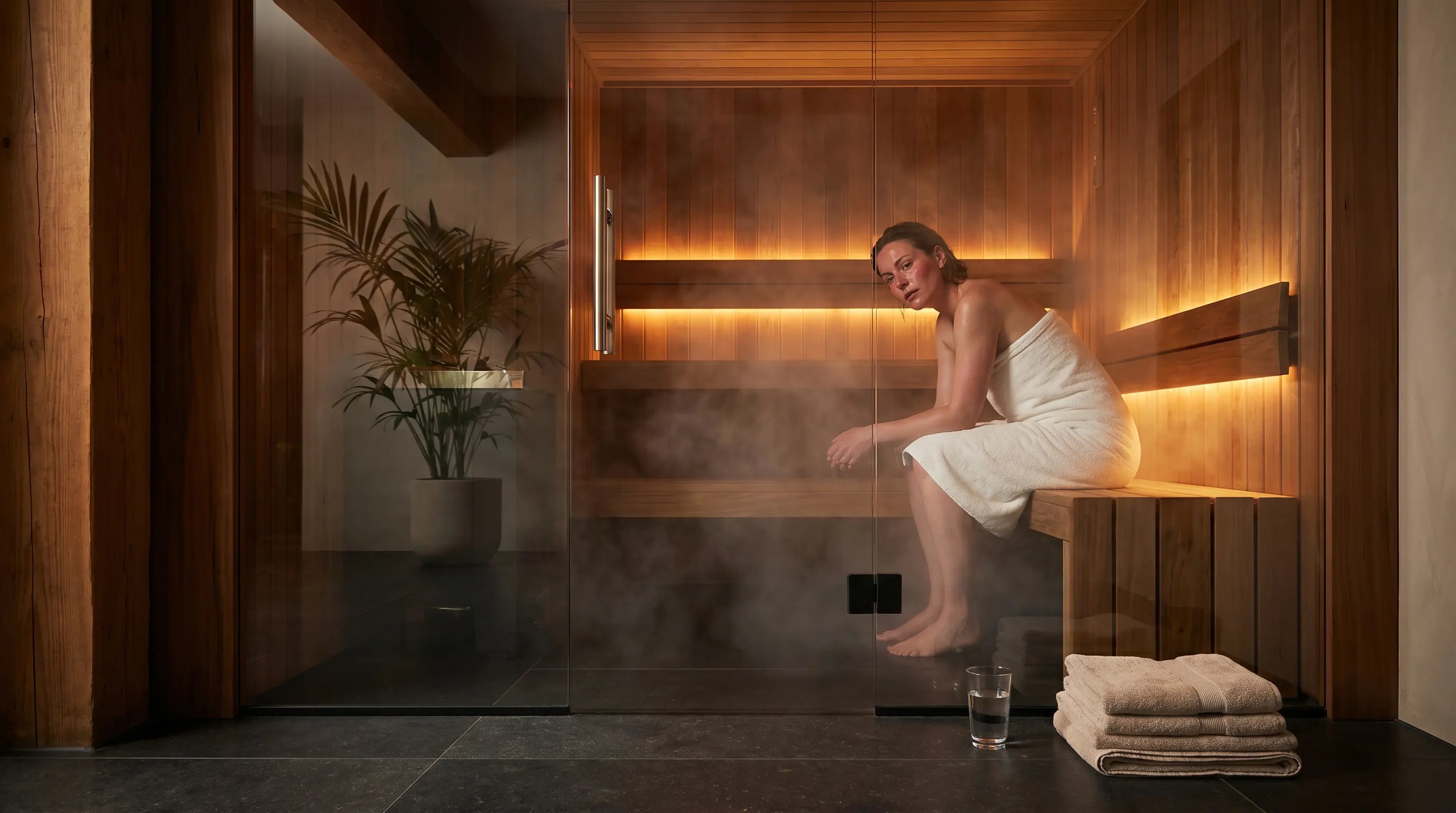
If you have a stuffy nose and scratchy throat, a sauna can sound like the perfect fix. Warm air, sweat, quiet, and deep breathing all feel like they should help. So, is a sauna good for a cold?
The honest answer: a sauna may help some people feel short-term relief from mild nasal congestion, but it does not cure a cold or make the virus go away faster. If you have a fever, chills, dizziness, dehydration, chest tightness, shortness of breath, or a hard cough, skip the sauna and rest.
This is one of the most debated sauna questions online. People on the internet ask if sauna can stop a cold early, if heat works like a fever, if steam clears mucus, and if public sauna use while sick is rude. The split makes sense. Some people feel better after heat. Others say sauna makes their cough worse or leaves them drained.
Here is how to think about sauna use safely when cold symptoms show up.
Quick answer: should you use a sauna when you have a cold?
You can consider a short, gentle sauna session only if your symptoms are mild and above the neck, such as a stuffy nose, light congestion, or a mild scratchy throat.
Skip the sauna if you have fever, chills, body aches, dizziness, weakness, nausea, dehydration, chest congestion, shortness of breath, a worsening cough, flu-like symptoms, or COVID-like symptoms.
Stay out of public saunas while sick. Even if heat makes you feel better for a few minutes, you may expose other people to a respiratory virus.
Why people think sauna helps a cold
Are saunas good for colds? People often connect sauna with cold relief for three reasons.
First, heat can feel comforting when you are congested. Warm air can make your face, throat, and chest feel more relaxed. If the sauna has humidity or steam from water on hot stones, breathing may feel easier for a short time.
Second, sweat makes people feel like they are “getting something out.” Many users describe sauna as a reset when they feel run down. That feeling may be real. The jump from “I feel better” to “the sauna cured my cold” is where the claim gets weak.
Third, regular sauna use is often part of a larger wellness routine. People who sauna often may also train, sleep more, drink more water, eat better, and have a steady home recovery setup. When they get fewer colds, it can be hard to know which habit deserves credit.
Can you sweat out a cold?
No. You cannot sweat out a cold in the way people usually mean it.
A cold is caused by a virus. Sweating does not flush the virus out of your body. A hot sauna does not replace immune recovery. Most colds improve with time, rest, fluids, and symptom care.
That said, a warm sauna may make you feel looser or less congested for a while. That is symptom relief, not a cure.
A good way to think about it: sauna can be part of a comfort routine when you are well enough for heat, but it should not be treated like medicine for an active respiratory infection.
What are people really asking
Threads on the internet around sauna and colds show three clear concerns.
“Am I helping my immune system or making things worse?”
People ask if adding heat is like helping a fever. It is not that simple. Fever is a body response. Sauna is an outside heat stressor. If your body is already fighting illness, extra heat may feel like too much.
“Will sauna clear congestion?”
Some users say sauna helps a stuffy nose. Others say it triggers harsh coughing. This split matters. If your cold is mostly nasal congestion, you may feel short-term relief. If your throat or airway is irritated, hot air may feel rough.
“Is it selfish to use a public sauna while sick?”
Yes, in most cases. Public saunas are shared spaces. If you are contagious, stay home.
Sauna for congestion: when it may feel good

A short sauna session may feel good when you only have mild congestion and no fever. The warmth can help you relax. Slow breathing may calm you down. If the sauna is humid, the air may help loosen mucus for some users.
If you try it, keep the session gentle:
- Keep it short, around 5 to 10 minutes.
- Drink water before and after.
- Sit lower, where the room feels less hot.
- Leave if you feel worse.
- Do not push for a deep sweat.
- Do not drink alcohol before or after.
- Do not follow it with a cold plunge while sick.
This is not the time to chase your longest or hottest session. Treat the sauna like a warm shower: optional comfort, not a challenge.
Sauna with fever: why you should skip it

Do not use a sauna if you have a fever.
When you have a fever, your body is already running hot. A sauna adds more heat, more sweating, and more fluid loss. That can make you feel weaker and may raise your dehydration risk.
Fever often comes with body aches, fatigue, chills, and poor appetite. Those are signs to rest, not signs to add heat stress.
The rule is simple: fever means no sauna.
Sauna with cough: be careful
A sauna can feel good for congestion, but it may make a cough worse for some people.
This can happen because hot air, dry air, steam, or a fast change in temperature can irritate already sensitive airways. If your cold has moved into your chest, or if coughing is one of your main symptoms, skip the sauna.
A warm shower, humidifier, saline rinse, tea, honey if suitable for you, and rest are safer first steps.
Public sauna while sick: do not do it

Do not use a gym sauna, apartment sauna, hotel sauna, spa sauna, or shared sauna if you are sick.
This is both etiquette and health. Even if your symptoms feel mild, you could still spread a respiratory virus in a shared indoor space.
Public sauna use creates another issue: you may not control the heat, cleaning schedule, crowding, or airflow. If you start feeling worse, you may not have the quiet or privacy you need.
If you have your own home sauna, the decision is about your symptoms. If it is public, the answer is easy: stay out until you are well.
Home sauna while sick: the safer setting, but not always smart

A home sauna is different from a public sauna. You are not exposing strangers. You control the session length, heat, towels, water, privacy, and post-sauna rest.
That makes a home sauna more comfortable if you only have mild congestion. You can step out fast, shower, hydrate, and lie down.
Still, the same safety rules apply. Do not use your home sauna with fever, chills, chest symptoms, dizziness, weakness, or dehydration risk. Do not try to “burn out” a cold. Do not use sauna if your doctor has told you to avoid heat.
Building a home sauna routine? A home sauna can support a steady wellness ritual when you are healthy. It should not replace rest when you are actively sick.
Infrared sauna vs traditional sauna for a cold

If you are mildly congested and set on using a sauna, an infrared sauna may feel easier for some users because it often runs at lower air temperatures than a traditional sauna. A traditional sauna can feel more intense, especially with steam from water on stones.
That does not mean an infrared sauna is a cold treatment. It only means the lower heat setting may be easier to control.
For either type, keep it short and gentle. If symptoms get worse, stop.
For a full comparison of the two heat styles, see our infrared sauna vs steam sauna guide.
Sauna and cold plunge when sick
Skip cold plunge when you are sick.
Sauna alone is already a heat stressor. Cold plunge adds another stressor right after. When you are healthy, contrast therapy can be part of a recovery routine. When you are sick, your body is already working.
If you have a cold, fever, chills, body aches, or chest symptoms, do not stack sauna and cold plunge. Rest, hydrate, and return to contrast therapy when you feel well again.
Can regular sauna use help prevent colds?
There is some evidence that regular sauna use may be linked with fewer colds, but the evidence is not strong enough to promise prevention.
This is where many articles go too far. A steady sauna routine may support relaxation, better sleep habits, circulation, and overall wellness. It may be one piece of a healthy lifestyle. It should not be sold as an immune shield.
The safest way to frame it is this: regular sauna use may fit into a long-term wellness routine. It should not be marketed as a guaranteed way to prevent colds.
What to do instead when you have a cold
If you are sick right now, start with the steps medical sources commonly recommend:
- Rest
- Drink fluids
- Use a clean humidifier or cool-mist vaporizer
- Try saline nasal spray or drops
- Sip warm liquids
- Use over-the-counter symptom relief if it is safe for you
- Sleep more than usual
- Stay home when contagious
A warm shower can give many of the same comfort cues as a sauna with less heat strain. A humidifier can help keep air moist while you rest. Saline spray or rinse can help nasal congestion without raising body temperature.
When to get medical care
Most colds get better with time, but some symptoms deserve medical care.
Call a healthcare professional if you have trouble breathing, dehydration, fever lasting more than 4 days, symptoms lasting more than 10 days without getting better, symptoms that improve then return or get worse, or a chronic condition that gets worse during the illness.
You should also be more cautious if you are pregnant, older, immunocompromised, have heart disease, lung disease, asthma, uncontrolled blood pressure, or take medicine that affects heat tolerance.
Home sauna routine after a cold
Once your fever is gone, your energy is back, and symptoms are clearly improving, ease back in.
Do not jump straight into your longest or hottest session. Try this:
- First session back: 5 to 8 minutes.
- Keep the heat lower than normal.
- Skip cold plunge that day.
- Drink water.
- Leave while you still feel good.
- Rest after.
If coughing returns, dizziness appears, or fatigue spikes, wait another day or two.
FAQ: is a sauna good for a cold?
Is a sauna good for a cold?
A sauna may feel soothing for mild congestion, but it does not cure a cold. Skip it if you have fever, chills, dizziness, chest symptoms, dehydration, or a bad cough.
Does a sauna help with a cold?
A sauna does not cure a cold, but it may help some people feel short-term relief from mild congestion. If you are wondering whether a sauna will help with a cold, the honest answer is that it can make you more comfortable for a few minutes, but it will not make the virus clear faster. Saunas help with colds only at the comfort level, so skip it if you have a fever, chills, or chest symptoms.
Should you use a sauna when sick?
Only if your symptoms are mild and above the neck, like a stuffy nose, and you have no fever. A sauna is not good when sick if you have a fever, body aches, dizziness, or a worsening cough, since the extra heat adds strain. Stay out of public saunas when sick so you do not spread illness to others.
Is a sauna good for a head cold?
For a mild head cold with congestion and no fever, a short, gentle sauna may feel soothing and help loosen a stuffy nose for a while. It is not a cure, and a head cold that comes with fever, sinus pain, or a heavy cough is a sign to rest instead.
Can a sauna help a stuffy nose?
It may help some people feel short-term congestion relief, especially if the air is warm and humid. Relief does not mean the cold is gone.
Can you sweat out a cold in a sauna?
No. Sweating does not remove the virus from your body or prove that you are recovering faster.
Is sauna good for a sore throat?
It depends. Some people find warm air soothing. Others find heat irritates the throat or triggers coughing. If it feels worse, stop.
Should I use a sauna with a fever?
No. Fever is a clear sign to skip sauna and rest.
Is an infrared sauna good for a cold?
An infrared sauna may feel easier because it often uses lower air temperatures, but it is not a cold cure. Use only if symptoms are mild and you feel well enough for heat.
Should I go to a public sauna when I am sick?
No. Stay out of public saunas while sick so you do not spread illness to other people.
Can regular sauna use prevent colds?
Regular sauna use may be linked with fewer colds in some research, but it is not a guarantee. Think of sauna as part of a wellness routine, not a shield against viruses.
Related reading and next steps
If you are building a sauna routine, these related topics make strong next reads:
- What to wear in a sauna?
- How long should you sit in a sauna?
- How hot should a sauna be?
- How many calories do you burn in a sauna?
- 10 benefits of sauna backed by research
- Home sauna buying guide


