


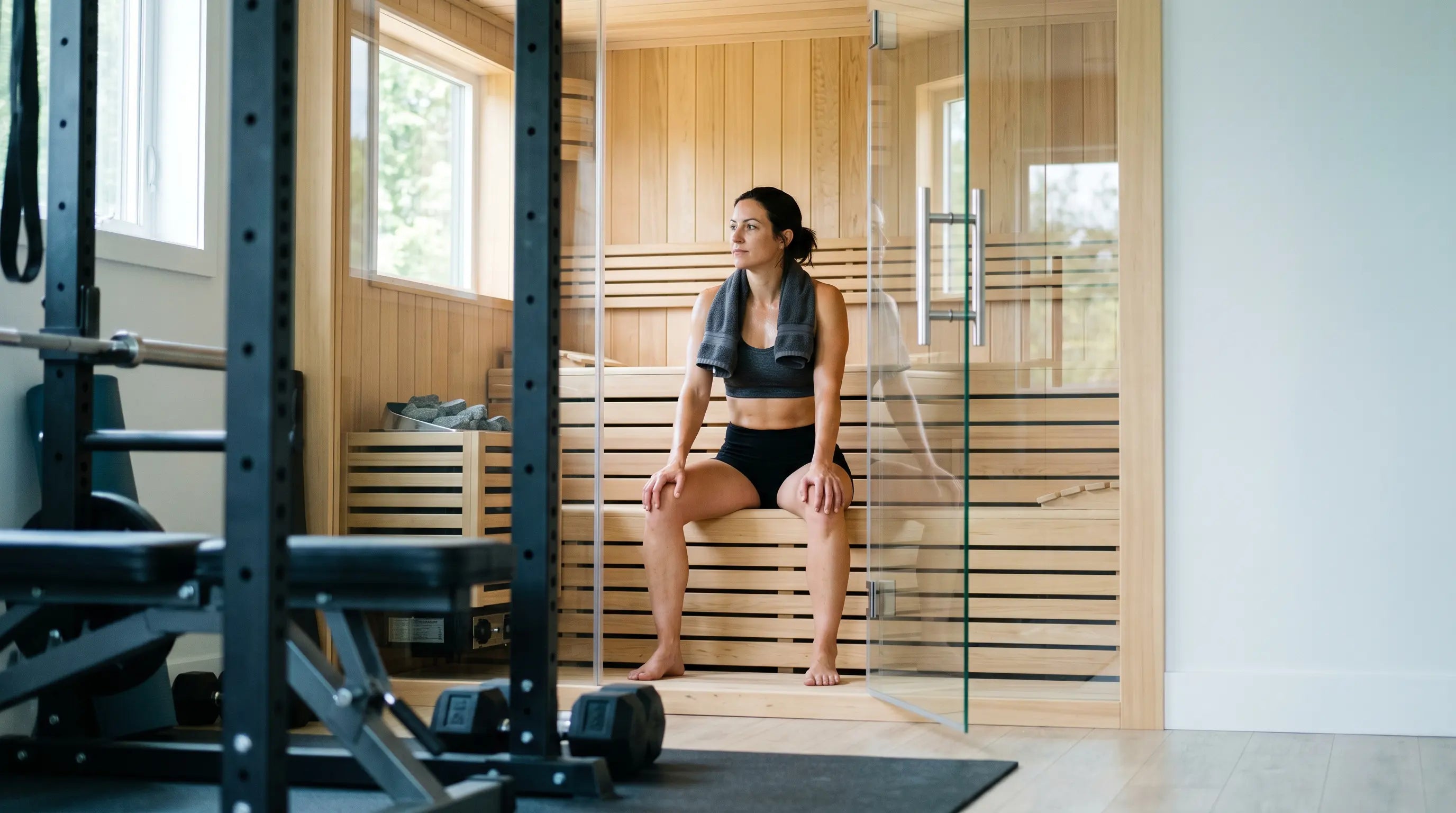
For most healthy adults, the better choice is to use a sauna after a workout, not before. A short sauna session fits well after your cool-down, once your fluids and breathing return closer to normal. Before training, the sauna can raise your body temperature, make you sweat, and leave you feeling drained before the hard work even starts.
That is the simple answer.
Here is the better answer: sauna timing depends on your workout, your goal, your heat tolerance, and whether you use an infrared sauna, traditional sauna, steam room, or outdoor sauna at home.
People ask this question in plain language. One of our customers said they always thought they should use the sauna after training, but someone at the gym told them to go before. Also, other athletes on the internet asked whether a pre-workout sauna is just as useful, and whether post-lift sauna use can hurt gains. The worry turns more specific: could post-workout heat reduce the stress response that helps muscle growth?
Let's break it down.
Quick Answer: Sauna After Workout Wins for Most People
Use this simple rule:
| Goal | Better timing | Why |
|---|---|---|
| Heavy lifting | After workout | Keeps strength, focus, and grip fresh |
| Hard cardio | After workout or a separate time | Cuts dehydration and overheating risk |
| Mobility or light recovery day | Before or after | A short session may help stiffness |
| Sleep and stress relief | After workout or evening | Helps the body shift into a calmer state |
| Heat adaptation for endurance | After workout | Repeated heat after training may help some runners in hot conditions |
A sauna should not replace your warm-up. A real warm-up uses movement: easy cardio, mobility, ramp-up sets, band work, or sport-specific drills. Heat can make you feel loose, but it does not prepare your tendons, joints, coordination, and work sets the same way.
Peloton's expert-sourced guide notes that pre-workout sauna use can raise body temperature and sweating, which may hurt training output. It also notes that most experts prefer a sauna after training, while some people may benefit from separate sauna sessions away from the workout window.
Why a Sauna Before a Workout Can Backfire
A sauna before training feels tempting. The room is quiet. Your muscles feel tight. You want to sweat first and train second.
The problem is that hard training already creates heat. A sauna adds more heat before your body has done any work.

1. You may start the workout partly dehydrated
Cleveland Clinic names dehydration as one of the biggest sauna risks and recommends drinking water before and after sauna use. Dehydration can show up as thirst, headache, cramps, weakness, or confusion. Now add squats, sprints, rowing, tennis, or a hot outdoor run, and you may feel flat halfway through.
2. Your heart rate may climb before the first set
Heat exposure raises strain on the body. That does not make it bad, it means timing matters. Before a heavy session you want focus and power. You do not want to walk to the rack already overheated.
3. It can trick you into skipping a real warm-up
A sauna can make tissue feel warm. It does not teach your hips to hit depth, your shoulders to press, or your ankles to move through a running stride. In the r/Sauna thread "Have you ever used a sauna before the gym or sports?", one user liked a short pre-sport sweat but still said it was not a substitute for a warm-up.
When a sauna before a workout can make sense
A short pre-workout sauna may work if you meet all of these conditions:
- You keep it brief, around 5 to 8 minutes.
- You are doing light lifting, stretching, mobility, yoga, or easy zone 2 cardio.
- You hydrate first.
- You cool down before training starts.
- You do not feel dizzy, sleepy, or heavy.
Skip it before max-effort lifting, HIIT, long runs, hot-weather training, sauna suits, or any session where performance matters.
Why a Sauna After a Workout Often Fits Better
After training, most people want three things: calm, recovery, and a routine they can repeat. That is where sauna after workout use makes sense.

It helps you slow down
A post-workout sauna creates a clean end point. You lift, run, ride, or train, then you cool down, drink water, and sit. That ritual matters, because many people rush from training straight to work, parenting, screens, or errands.
It may support perceived recovery
A 2025 systematic review in Sports Medicine - Open found that post-exercise whole-body heat exposure has mixed results for acute recovery. Some studies showed a benefit, some showed no effect, and one showed harm. The same review found stronger promise for repeated post-exercise heat use in endurance settings, mostly when heat acclimation changes occur.
Plain English: a post-workout sauna is not magic. It can still help many people feel better, relax, and stick with a recovery routine.
It pairs well with a home sauna habit
A home sauna removes the locker-room friction. No waiting, no crowded room, no rushed shower, no guessing whether the sauna is clean. For Saunass buyers, that matters. The real win is not one perfect sauna session, it is building a repeatable weekly habit at home.
How Long Should You Sauna After a Workout?
For most beginners, start with 5 to 10 minutes after your workout. Many regular users stay in the 10 to 20 minute range.
Cleveland Clinic recommends keeping sauna sessions to around 15 to 20 minutes, starting with shorter sessions if you are new, staying hydrated, and leaving the sauna if you feel dizzy, weak, short of breath, or unwell.
Use this home routine:
- Finish your workout.
- Cool down for 5 to 10 minutes.
- Drink water or electrolytes.
- Shower if needed.
- Sauna for 5 to 20 minutes.
- Leave while you still feel good.
- Rehydrate and eat your normal post-workout meal.
Do not chase suffering. More heat does not mean more benefit.

Sauna After Lifting: Will It Hurt Muscle Growth?
This is one of the most Reddit-shaped questions on the topic. In a reddit thread, one sauna user asked whether a sauna's anti-inflammatory effects could be bad after training, like the debate around cold plunge timing and hypertrophy.
Current evidence does not give a clear yes or no for strength growth. The 2025 Sports Medicine - Open review found that post-exercise heat results vary by study, training mode, timing, and heat method. It also found that whole-body heat can add to an athlete's recovery load.
Here is the practical take. For strength or hypertrophy, use the sauna after lifting only once you cool down. Keep it moderate. Do not turn leg day into a second endurance event. If the sauna leaves you wiped out, cut the session shorter or move it to a rest day.
A good post-lift sauna target is 10 to 15 minutes. If you are deep in a high-volume strength block, start lower.

Sauna After Cardio: What Runners and Cyclists Should Know
Cardio creates heat. Long cardio creates more. Hot-weather cardio creates the most.
Mayo Clinic warns that exercising in heat adds stress to the body, and that dehydration plays a key role in heat illness. Warning signs include cramps, nausea, fainting, dizziness, headache, heavy sweating, low blood pressure, and vision issues.
For runners, cyclists, rowers, and endurance athletes, the safest timing is usually after the session or at a separate time of day. Start small.
Try this:
- Easy run: 10 minutes in the sauna after fluids and a cool-down.
- Long run: wait until you feel normal, then use 5 to 10 minutes, or skip it.
- Speed work: use the sauna later in the day or the next day.
- Hot outdoor session: skip the sauna unless you feel fully recovered.
Repeated post-exercise heat may help heat acclimation in some endurance plans, but the research is still mixed. Treat it as a tool, not a guarantee.

Infrared vs Traditional Sauna After a Workout
Both can work after training. The better choice depends on your home, your heat preference, and your routine.
Traditional sauna
A traditional sauna heats the air around you. Cleveland Clinic lists typical traditional sauna temperatures at around 150 to 195°F. This creates a hotter room feel and the classic dry sauna experience.
Choose a traditional sauna if you want:
- A classic high-heat sauna feel.
- A social or family sauna experience.
- An outdoor cedar sauna for backyard recovery, including barrel and cabin options.
- A sauna that feels like a true retreat.

Infrared sauna
An infrared sauna uses light to heat your body more directly, and often runs at lower temperatures. Cleveland Clinic lists common infrared ranges at around 110 to 135°F.
Choose an infrared sauna if you want:
- A lower air temperature.
- A gentler post-workout feel.
- A faster warm-up in many home setups.
- A strong fit for indoor saunas for home gyms.
For timing your sauna around a workout, infrared has one clear edge: the lower room temperature can feel easier to use after training. A traditional sauna has the stronger classic heat ritual. Both still require hydration, time limits, and body awareness.
For a full side-by-side of the two heat styles, see our infrared sauna vs steam sauna comparison.
Home Sauna Routine by Goal

Goal: build muscle
Use the sauna after lifting, not before. Keep it 10 to 15 minutes. Hydrate. Eat protein and carbs as planned. Avoid turning every session into a heat challenge.
Goal: improve recovery
Use the sauna after moderate training or on rest days. Track your sleep, soreness, and next-day training quality. If your next workout suffers, shorten the sauna or move it away from training.
Goal: reduce stress
Use the sauna after your evening workout or as a separate night routine. Keep the lights low. Leave your phone outside. Hydrate before bed.
Goal: train for hot weather
Use the sauna after easy or moderate endurance sessions. Keep notes. Watch for signs of poor recovery. Do not stack hard intervals, low fluid intake, and long sauna use.
Goal: make a home wellness space
Pair your sauna with a mat, towel hooks, a water station, a timer, and a clear path to the shower. If you plan to add cold plunge tubs with chillers or a hot tub later, map the footprint now, and check the sauna electrical requirements before you install.
Safety Rules for Sauna Around Workouts
Use these rules for any sauna, at home or at the gym:
- Do not use a sauna after drinking alcohol.
- Do not use it when you feel sick, faint, overheated, or dehydrated.
- Leave if you feel dizzy, weak, short of breath, confused, or nauseated.
- Drink water before and after.
- Keep your first sessions short.
- Talk with a health professional first if you are pregnant, over 65, under 16, on key medications, or have heart disease, blood pressure concerns, epilepsy, or other medical issues.
Cleveland Clinic lists several groups that should speak with a care provider before using a sauna, and says to exit if you feel dizzy, weak, short of breath, uncomfortable, or unwell.
FAQ: Questions Answered
Should I sauna before or after a workout?
For most people, after a workout is better. Before training, sauna use can raise heat strain and sweat loss before the session even starts. After training, it fits better as a recovery ritual once you cool down and drink fluids.
Is a sauna before a workout a good warm-up?
No. A sauna can make you feel warm, but it does not replace movement. Use light cardio, mobility, and ramp-up sets first. A short sauna may help some people feel loose, but treat it as optional.
Can a sauna after lifting hurt gains?
There is no clear proof that moderate post-lift sauna use hurts muscle growth. The smarter concern is total stress. If the sauna leaves you drained, your sleep suffers, or your next workout drops off, shorten it.
How long should I sit in the sauna after a workout?
Start with 5 to 10 minutes. Many regular users stay around 10 to 20 minutes. New users should stop early and build up slowly. For a deeper breakdown, see our guide on how long you should sit in a sauna.
Is a sauna after cardio safe?
It can be safe for healthy adults when you cool down, hydrate, and keep the session short. Skip it after very hot, long, or draining cardio sessions until you feel fully recovered.
Does a sauna help weight loss after a workout?
It can reduce your scale weight for a short time because you sweat out water. That is not fat loss. Cleveland Clinic says sauna use is not recommended as a weight loss tool, and that short-term weight change from sweating reflects dehydration. For the full picture, see whether saunas help you lose weight.
Is an infrared sauna better after workouts?
Infrared can feel easier after training because it often uses a lower air temperature. A traditional sauna gives a hotter, classic experience. The right choice is the one you will use safely and often.
Build your home recovery routine with Saunass. Shop home saunas or start with the Sauna Finder Quiz.


